Paver Patio Wash and Polymeric Sand Refresh Done Right
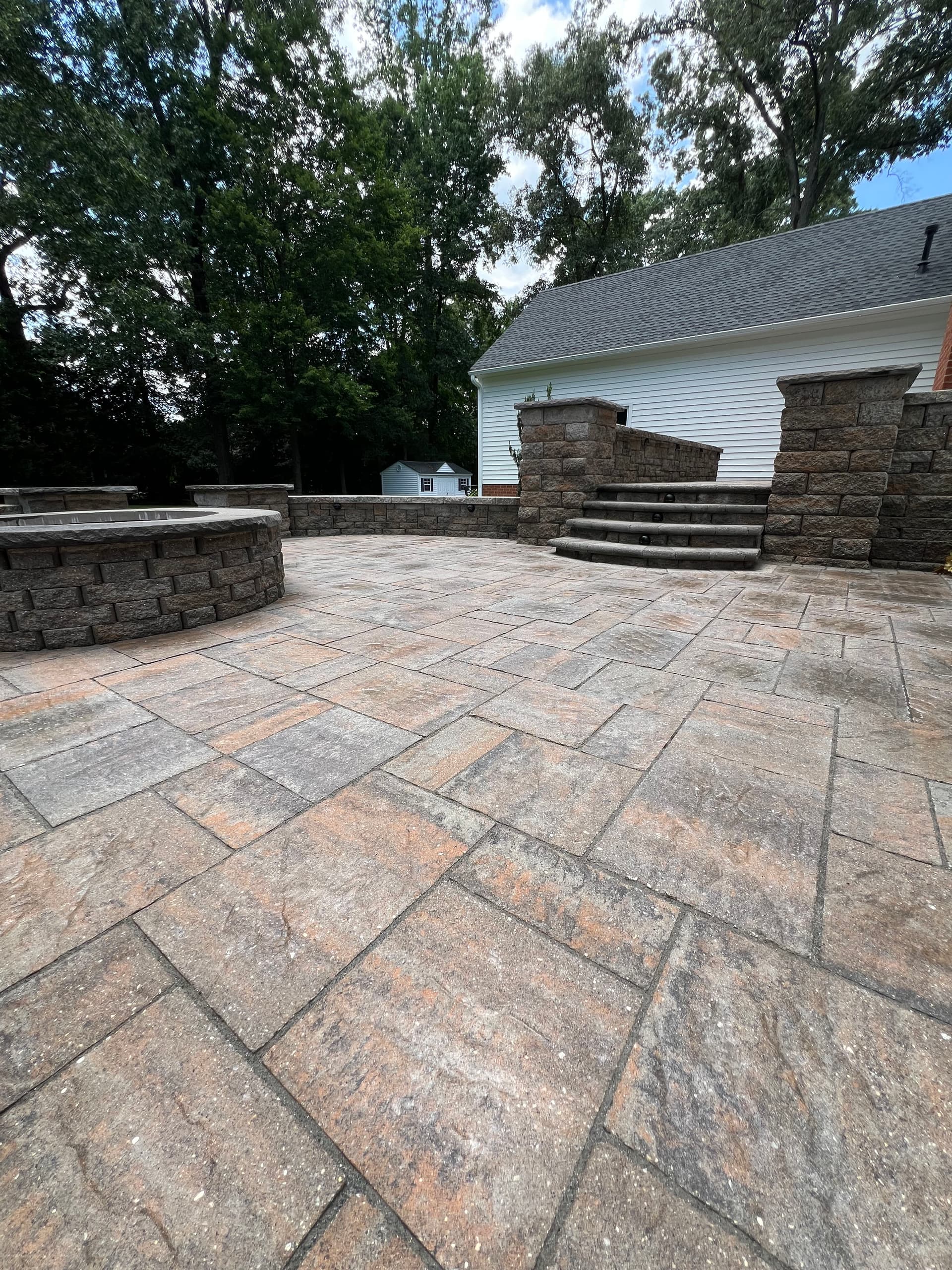
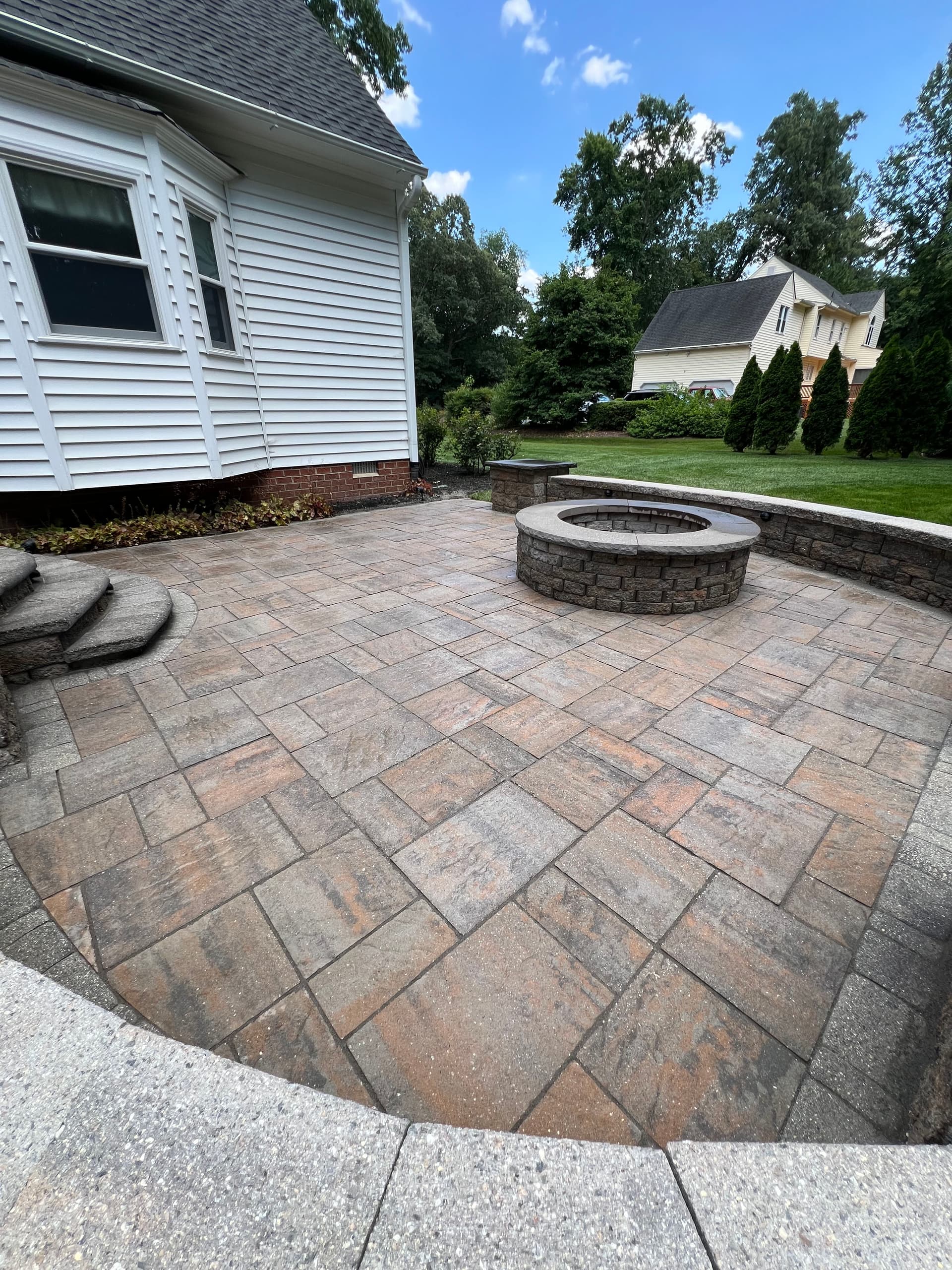
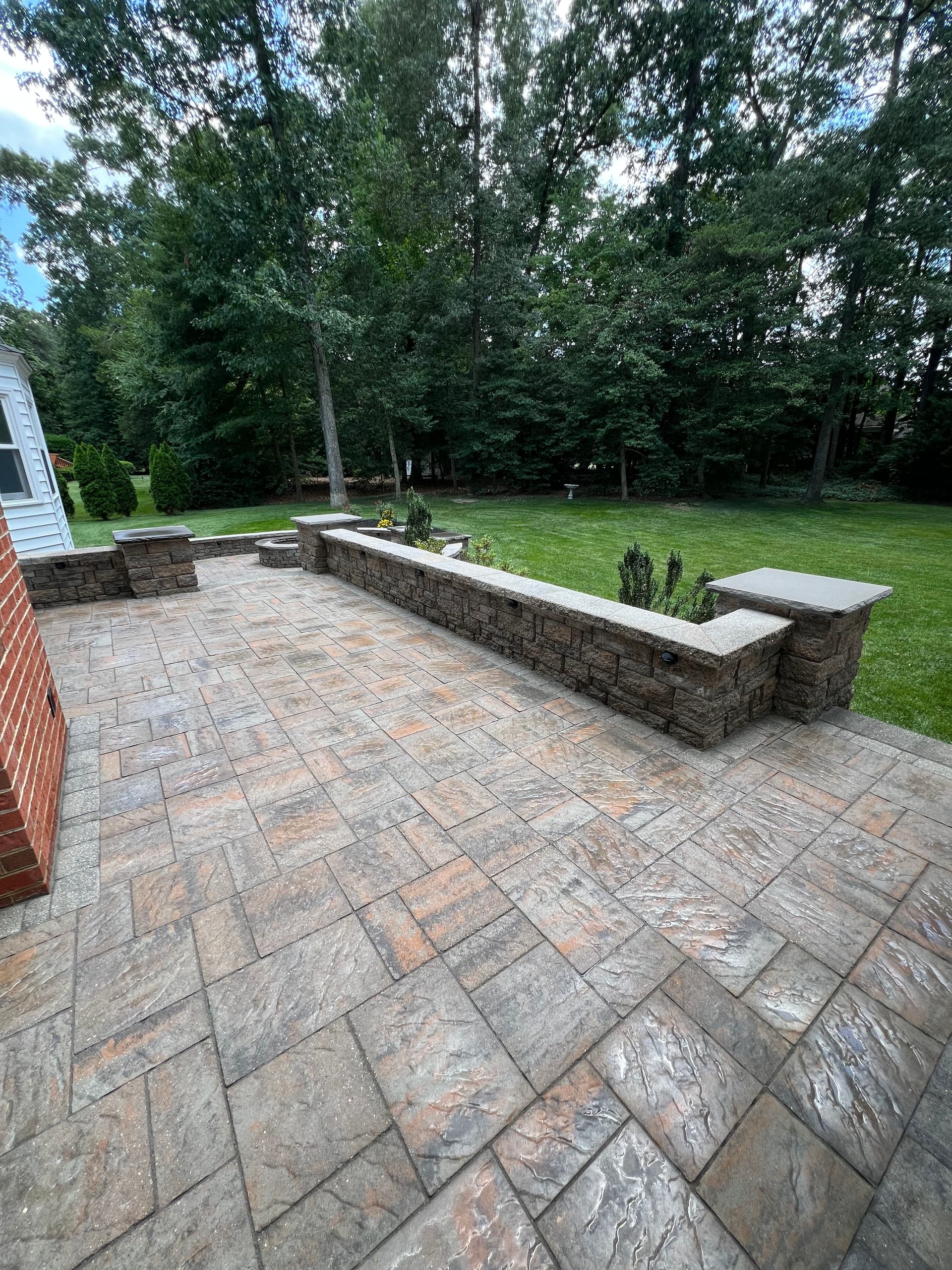
This patio had good bones - a large, well-built paver surface with a built-in fire pit, seating walls, and stone steps. But over time, the joints start to break down. Sand washes out, weeds creep in, and the whole surface starts to look rough around the edges. That's exactly where this one was headed.
We started with a thorough wash to pull the grime and debris out of the surface and joints. Getting that step right matters more than most people realize. If you skip it or rush it, the polymeric sand won't bond properly and you're back to square one before long.
Once the surface was clean and dry, we packed fresh polymeric sand into every joint across the patio. Polymeric sand is the right call for a surface like this - it locks in tight when activated, resists washout, and helps keep weeds and insects from working their way through. The difference between tight, full joints and empty or crumbling ones is pretty significant when it comes to how the patio holds up long term.
What we ended up with is a patio that looks clean, feels solid underfoot, and is genuinely ready to be used. A space this nice - with the fire pit, the seating wall, the steps - deserves to be maintained properly. A good wash and fresh sand is one of the simplest ways to protect a paver investment and keep it looking sharp for years to come.
Most paver patios just need some attention every few years to stay in great shape. It's not complicated work, but it has to be done right. We take that seriously on every job.